Airspace awareness
What does a drone over your campus actually cost you?
What uncertainty costs a site, and how airspace awareness can support a proportionate response.
David Voigts2 min read
A drone over a campus raises immediate questions. Is it authorised? What is it doing? Who needs to decide what happens next?
The cost is not limited to physical damage. Time spent investigating, interrupted work and a response taken without enough information can all matter. The effect depends on the site and its continuity arrangements.
Count the consequences
A drone may observe the layout and activity of a site. It may disrupt work or create concern among staff. In a more serious scenario it may carry a harmful payload. Those are different situations, and they should not all trigger the same response.
An evacuation may disrupt operations, but it is not automatically a service-level breach. The decision depends on the assessed threat, people at risk and the site’s procedures. A useful cost assessment distinguishes interruption, response effort and investigation instead of assigning a single price to every drone sighting.
Build the evidence for a decision
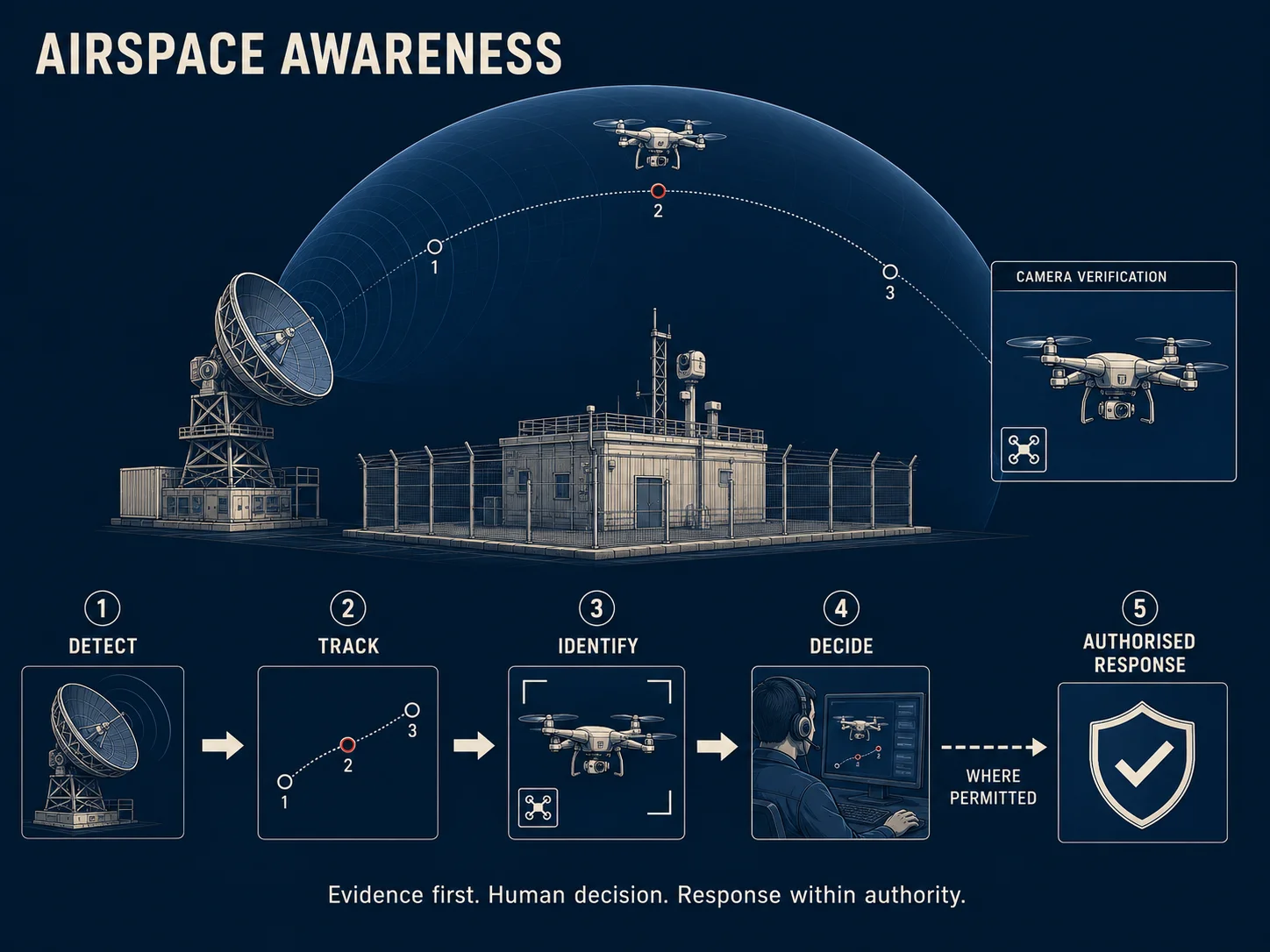
Detection starts the sequence. Tracking helps establish movement. Camera and other sensor evidence may help identify the aircraft and assess what it is doing. A person then needs to decide within the authority available.
Awareness supports that decision. It does not by itself prevent filming, remove every disruption or establish who controls the aircraft. The design should make the limits of identification and tracking explicit, alongside the information operators can expect to receive.
Establish the response authority
A site should not assume that it can interfere with an aircraft simply because it can detect it. The response options depend on the jurisdiction, site and relevant authorities. Establish those arrangements before an event, including who to contact and who can authorise action.
Sensors, procedures and training need to fit together. The team needs a practical way to assess the event, record its reasoning and coordinate the response.
Where to start
Ask what a drone event would interrupt, what information is currently available and who would make the decision. Then assess the sensing and procedures needed to close those gaps.
Start with the information your team needs to decide. Establish which responses are authorised and practical, and test the sequence before relying on it.