01
Wide-area maritime radar
Radar coverage designed for the target craft, approaches and operating conditions.
Detect an approach with time for assessment.
SEA
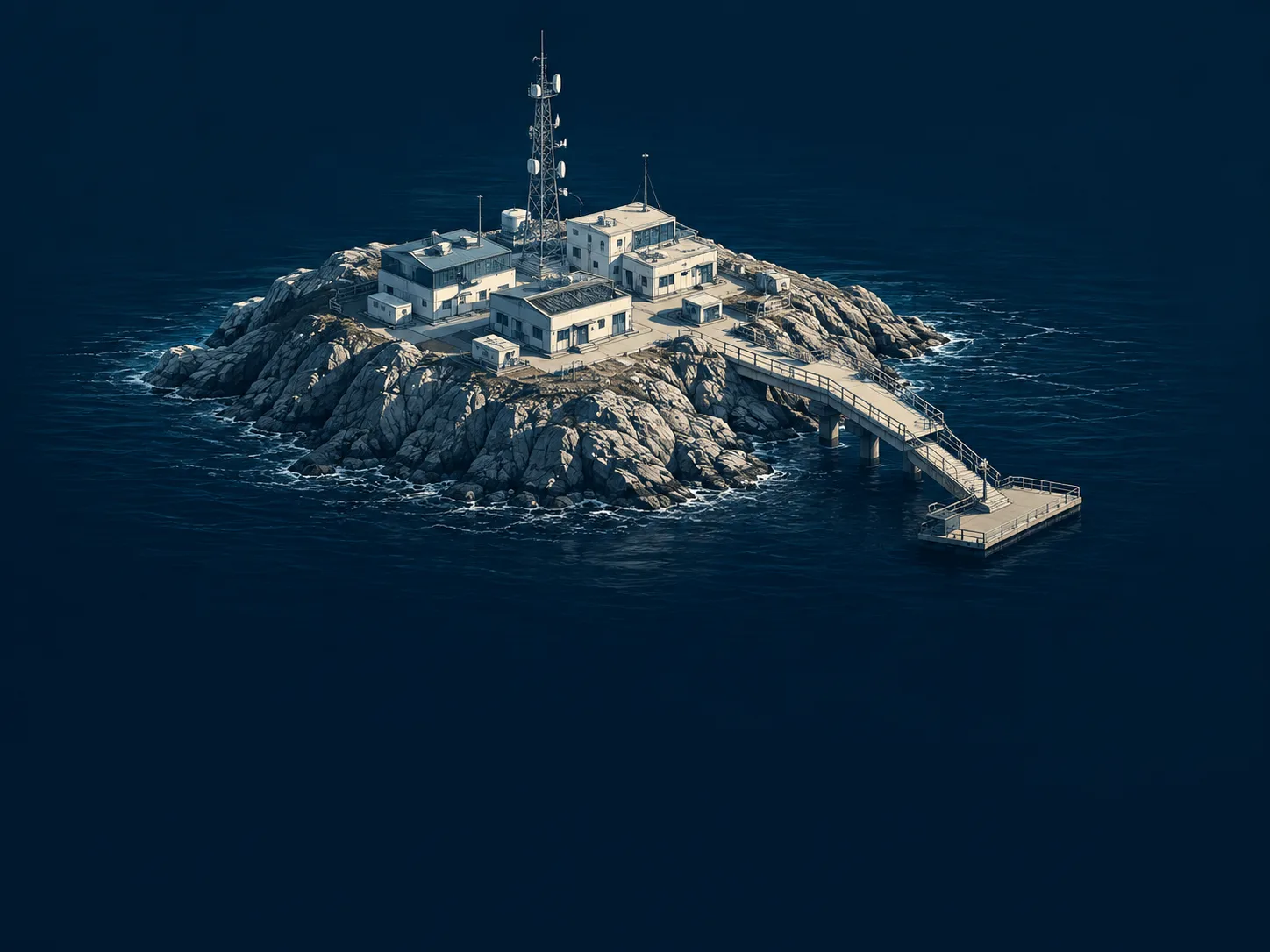
Maritime domain awareness combines radar, camera views and patrol information to support a response.
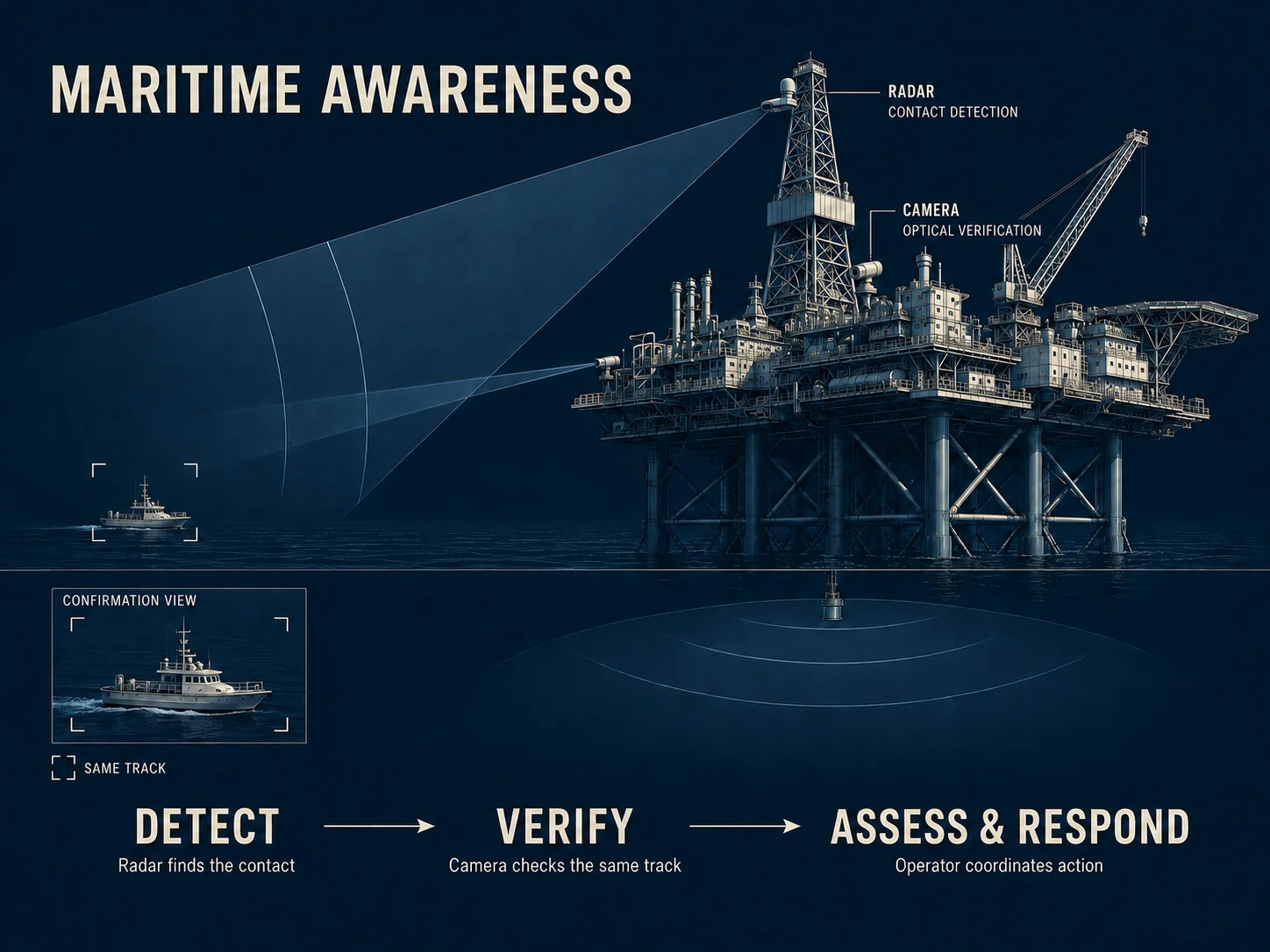
Small craft can close the distance to an offshore asset quickly. Radar, camera views and patrol information can provide earlier warning and help operators assess an approach. We design coverage around the geography, operating conditions and response options, with the limits of each layer made explicit.
Coverage stops being a matter of where a vessel happens to be.
The layer stack
Radar coverage designed for the target craft, approaches and operating conditions.
Detect an approach with time for assessment.
Electro-optical and infrared sensors help operators assess radar contacts.
Use additional evidence to assess the contact.
Topside cameras rated for the marine environment.
Eyes on the platform itself, day and night, salt and spray.
Unmanned patrol options assessed alongside crewed vessels and fixed sensors.
Extend awareness where the operating conditions and cost case support it.
Long-range voice warnings, with range, operating limits and authorisation assessed for the site.
Give an approaching vessel an opportunity to identify itself or change course.
Detection of underwater approach where the threat and site warrant it.
The one approach most operators can't see, covered.
Every maritime feed fused into the same operating picture as land and air.
One picture of the whole domain. See Integrated Command.
Scales with the threat
from a single platform's radar to a national-waters picture.
Response arrangements are assessed for the jurisdiction and site. In extractive environments, the design is aligned to the Voluntary Principles on Security and Human Rights (VPSHR). Warning and intervention measures require appropriate authorisation and operating limits.
Proof
West Africa · Offshore Energy
FlagshipHigh: petro-piracy, kidnap-for-ransom, platform incursion
The problem
An offshore operator relied on patrol vessels and disconnected sensors to monitor its waters. The assessment examined gaps in awareness and the existing response arrangements.
The design
We designed a layered architecture combining maritime radar, platform surveillance and access control within one command environment.
The outcome
The deliverable was a costed, phased implementation roadmap. It set out how coverage could be extended and reliance on patrol vessels reduced as stages were commissioned. These were planned improvements, not reported operating results.
Clients named on request, under NDA, with their consent.
The roadmap tests where sensors and unmanned coverage can reduce reliance on crewed patrols, while retaining the response functions the site needs.
THE CALL
Discuss your site, the gaps you are concerned about and the decision you need to make with our Director.