Detection & decisions
Most of your alarms are false
Why alarm noise erodes trust, and how verification helps operators recognise the events that matter.
David Voigts5 min read
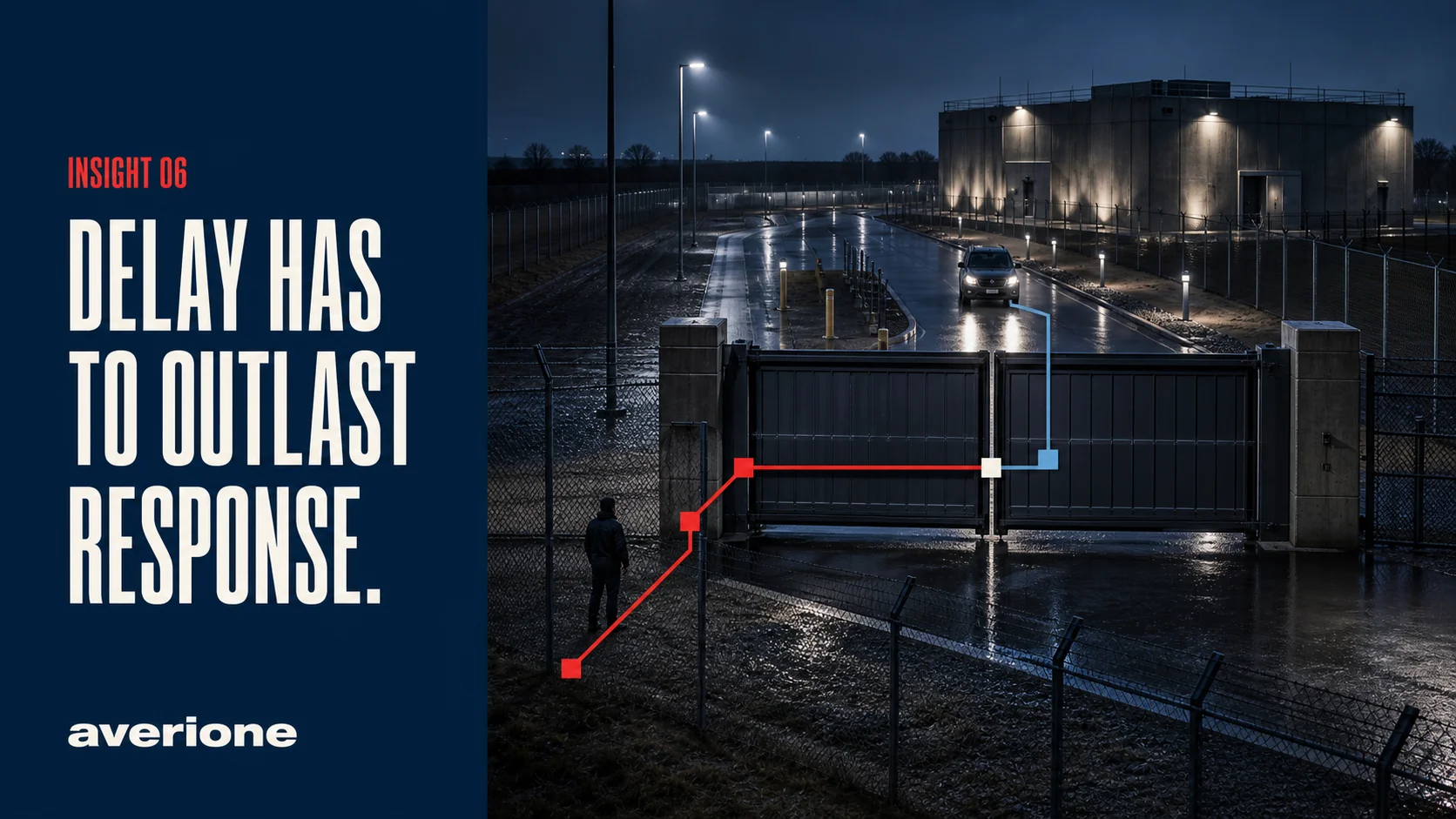
Every alarm I ever answered in Papua New Guinea arrived the same way: a red light and a zone number. The light for a loose door contact rattled by the wind was identical to the light for a home invasion in progress. Same colour. Same tone. Same panel. Whatever else we built, bought or promised our clients, that was the raw truth of the trade, and everything in this piece follows from it.
The room was mine. Our company ran central monitoring across the country, watching intrusion alarms, in-vehicle duress and anti-hijack systems, and dispatching armed response teams when they were triggered. Most activations were nothing: storms, brownouts, loose contacts, a gecko crossing a lens. But genuine events were not rare; home invasions and hold-ups were frequent. A genuine alarm looked identical to a false one until verified otherwise, and the panel never once told us which was which.
The numbers are worse than you think
For years I assumed this was a frontier problem. Then you read the data from the calmest jurisdictions on earth. In DeKalb County, Georgia, in 2000, alarm systems generated more than 144,000 calls for police response. The number of actual or attempted burglaries behind them was thirty-nine. Across the United States, the 2007 policing guide published by the US Department of Justice reported the false alarm rate at between 94 and 98 per cent and estimated the cost of police alarm responses at $1.8 billion in 2002. One hundred and forty-four thousand red lights. Thirty-nine of them meant it.
The police noticed before the industry did.
In a 2024 explanation of its security-systems policy, the Metropolitan Police described withdrawing automatic police response after three false alarms. Many US cities fine repeat offenders, and a growing number will not dispatch at all without independent verification that something is actually happening. Sit with that from a security manager’s chair: the system you bought to summon help can, through its own noise, lead to the withdrawal of automatic police response.
Noise trains people to ignore you
And the fines are the cheap part. Watch what a thousand meaningless red lights do to the people paid to answer them. An operator stops investigating and starts acknowledging. A response crew that has rolled on nothing for six months slows down. A manager paged at 3 a.m. for the fourth storm in a row starts sleeping through it. Industrial alarm engineering codified this long ago; guidance such as EEMUA 191 treats alarm workload as a design issue, rather than an operator failing. Beyond that, people triage, and then they tune out. Nobody decides to ignore the system. The system teaches them.
Verification changes the arithmetic
Which raises an awkward question: what happens if you simply stop answering?
Salt Lake City ran the experiment. In 2000 it became the first major US city to refuse response to unverified burglar alarms; something had to be seen, heard, or confirmed on site before officers moved. Critics predicted crime would rise. A peer-reviewed study of the policy associated the policy with an 87 per cent reduction in police alarm response calls, a 26 per cent reduction in burglaries and faster response to police calls. These are findings from that case study, not a guaranteed outcome for every estate. Removing the noise did not weaken the shield. It revealed that most of the shield had been noise.
Verification needs more than one signal
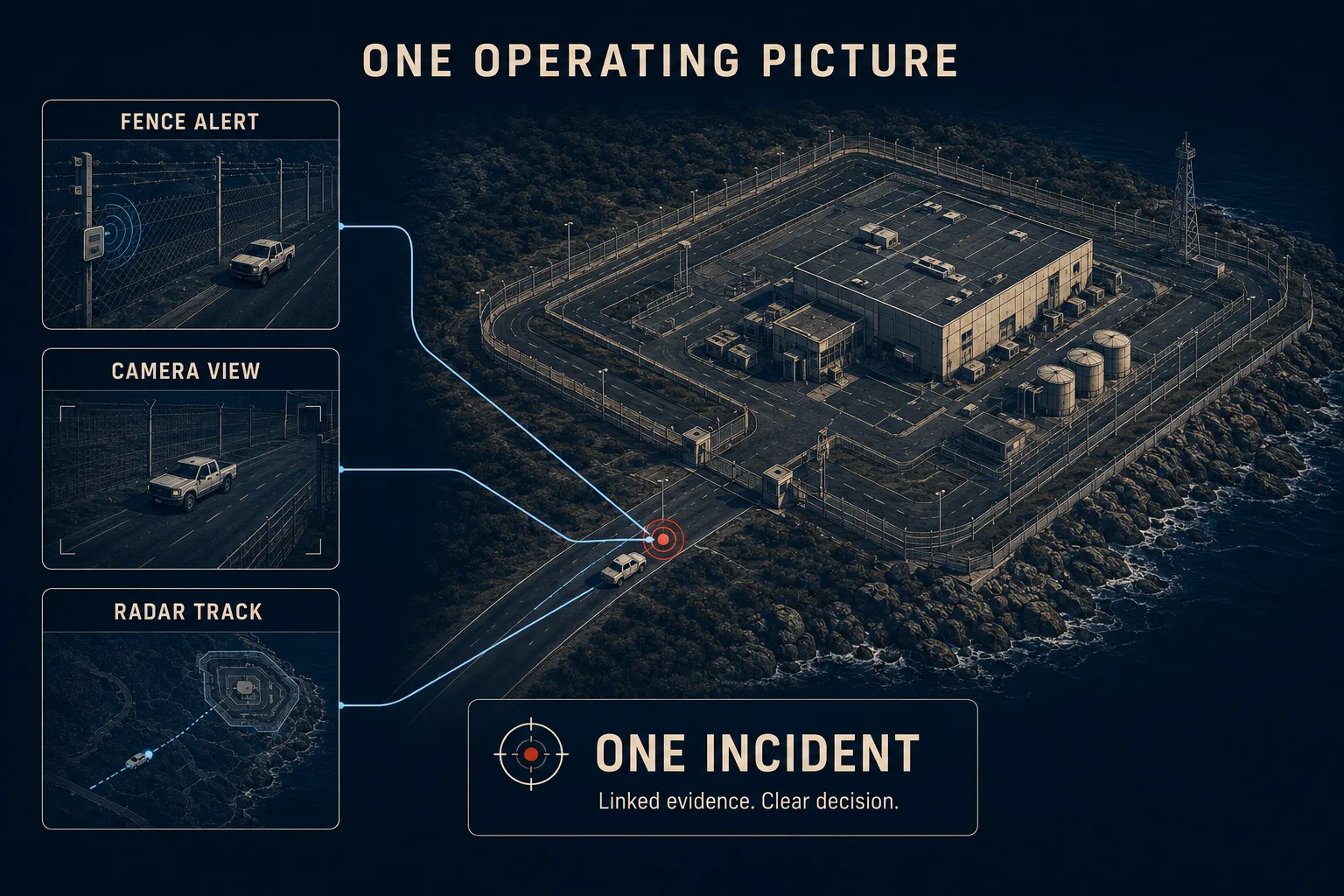
Scale this up to a modern enterprise estate, and both the tools and the stakes multiply. A perimeter is no longer a handful of door contacts; it is kilometres of fibre-optic detection that can pinpoint a disturbance on a fence to within a few metres, camera networks running analytics that can distinguish a person from an animal from weather, and radar and radio-frequency sensors monitoring the airspace above it all. Every one of those layers is a better detector than anything we had in Papua New Guinea. Every one is also another source of noise, and an estate that adds sensors without adding discipline has bought itself nothing but a bigger panel of red lights.
The fix is not a better sensor. It is a stricter definition of what triggers a red light. A storm can rattle a door contact. A camera view can help establish whether that activation reflects weather or a person. One sensor firing is a question. Independent evidence can help establish what caused it; agreement alone is not proof of an intruder. The UK’s BS 8243 alarm confirmation standard sets out methods for generating confirmed alarm conditions, rather than treating every activation as sufficient evidence. A modern estate can even verify without rolling anyone: a drone, where authorised and practical, can provide a camera view of the fence line. And it is the whole reason integration matters more than any component: when every layer feeds a single picture on a single clock, the system can correlate observations, reduce noise and give the operator stronger evidence.
Where to start
If I were handed a noisy estate tomorrow, I would not buy a single device. I would pull twelve months of activations and score every detector, to check whether a small number produces a disproportionate share of the noise. Investigate siting, maintenance, environment and procedure. Fix, move, or retire them. Then review verification and dispatch procedures, including how urgent duress or life-safety events are handled. Where appropriate, seek a second source before routine dispatch. The target is not zero alarms. It is a system in which an alarm means something again.
An alarm system’s real output is not detections. It is belief. Every false activation spends it, and every verified detection earns it back. The next red light on your panel will look exactly like the last thousand. The only question that matters is whether anyone still believes it.