Security economics
Manpower is the most expensive sensor ever fielded
Cost the patrol hour in full, then compare what people and sensors each contribute.
Thomas East2 min read
Ask what a patrol costs and the first answer is often the wage bill. The useful number includes much more: training, supervision, transport, fuel, maintenance, insurance and the cover needed when people or equipment are unavailable.
A patrol also does more than detect things. It can investigate, communicate, reassure and respond. Comparing it with a sensor only makes sense when we separate those tasks.
Cost the observation task
A vessel or vehicle can observe one part of a site at a time. Moving it changes what can be seen. Weather, access and staffing can change the coverage again. Start by recording what the patrol is expected to detect, where it operates and how often it can observe each approach.
Then work out the fully loaded cost of that observation. A vessel’s daily cost includes crew, fuel, maintenance, insurance and support. A gate post has a different cost structure. Neither can be represented fairly by wages alone.
Compare the operating limits
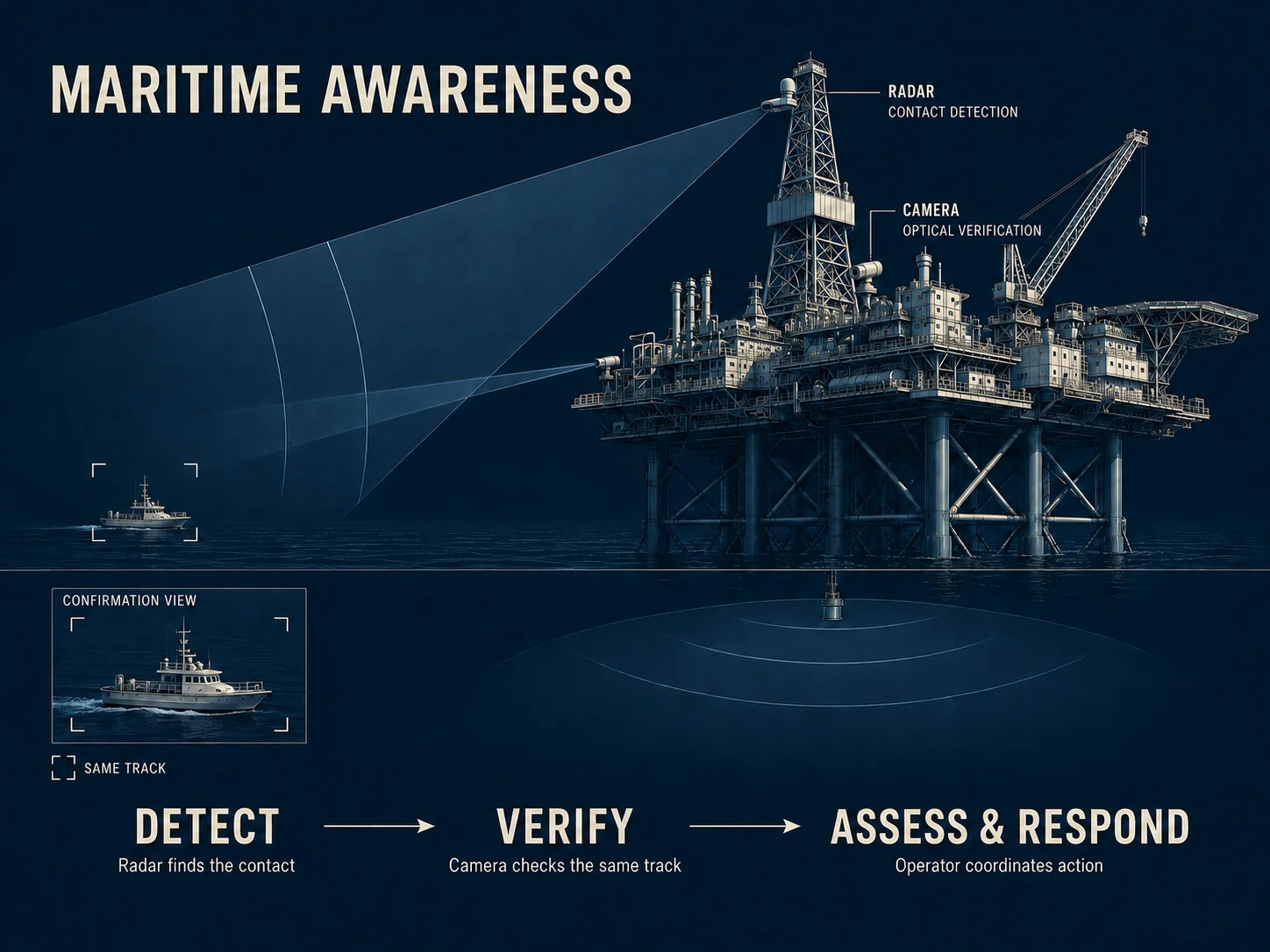
Radar, cameras and perimeter sensors can provide information between patrol visits. That does not make their coverage complete or their operation free. Power, communications, maintenance, environmental limits and the people assessing alarms belong in the comparison.
The question is which arrangement provides useful warning for the threat and site. Define what must be detected, how it will be verified and what happens when a sensor or communication link fails. Test those requirements before relying on the projected savings.
Keep judgement and response in view
Routine observation can consume time that experienced people could spend assessing and responding. Better sensing may let the team spend more time on those tasks, but it does not remove them.
A maritime programme still needs to account for the functions a crewed vessel provides. A camera can help assess an approach; it does not carry out an interception or rescue. The design and cost case need to retain the people and equipment required for those responsibilities.
Where to start
Take one patrol or observation task. Record its full cost, coverage and response responsibilities. Compare a sensor-supported option on the same basis, including maintenance and operator workload. Pilot it and measure the result.
That gives the board a decision it can examine: what improves, what remains human, what the operating limits are and what the change would actually cost.